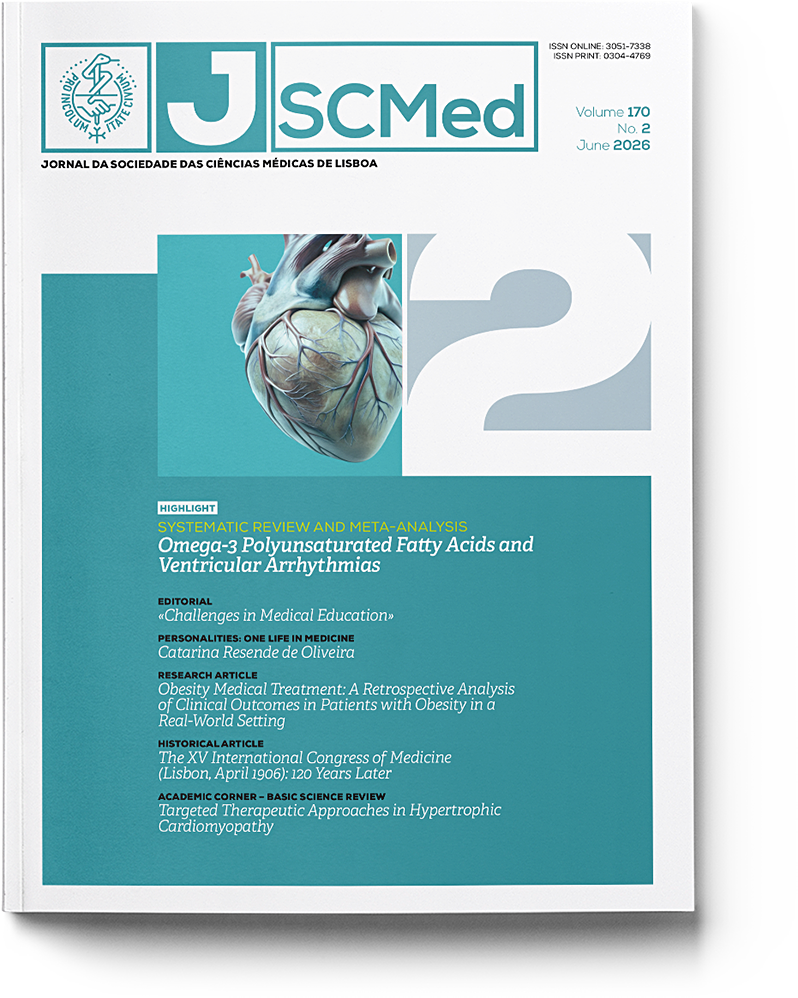
Obesity Medical Treatment: A Retrospective Analysis of Clinical Outcomes in Patients With Obesity in a Real-World Setting
DOI:
https://doi.org/10.57849/ulisboa.fm.jscml.0000049.2026Keywords:
Obesity, Weight loss, Pharmacological treatment, Semaglutide, LiraglutideAbstract
Background
Obesity is a chronic multifactorial disease characterized by excessive fat accumulation, influenced by genetic and environmental factors. It is associated with numerous health complications and significant reductions in life expectancy. Effective weight loss of at least 5% of total body weight (TBW) significantly reduces these risks. While lifestyle changes are pivotal, they often result in modest and difficult-to-maintain weight loss. Pharmacological treatments have emerged as effective strategies for achieving weight loss, yet data from real-world settings remain limited.
Objective This study aims to evaluate the effectiveness of pharmacological treatments for weight loss in real-world clinical practice. Methods This observational, retrospective cohort study analyzes data from patients enrolled in a multidisciplinary obesity treatment program at a Portuguese public hospital, from July 2022 to November 2024. Inclusion criteria were age >18 years, body mass index (BMI) >25.0 kg/m², prior failed lifestyle interventions, and ≥3 months of pharmacological treatment (including semaglutide, liraglutide, bupropion/naltrexone and orlistat). For treatment goals we stablished a weight loss of ≥5% TBW at 6 months and ≥10% TBW at one year. Demographic, clinical, and treatment data were collected from medical records, and weight loss outcomes were assessed at three-month intervals. Results Forty-three patients were included, with a mean age of 53±15 years and a mean BMI of 39.1±7 kg/m². After six months of treatment, 81% achieved the ≥5% TBW reduction target, with 45.9% surpassing ≥10% TBW. After one year, 54.5% lost ≥10% TBW, and 41% achieved ≥15% TBW reductions. Semaglutide users experienced the highest mean TBW loss (-10.8%). A total of 43% of patients were reclassified to a lower obesity class. Treatment goals were met by 81.1% of patients at 6 months and by 54.5% at 12 months. Conclusions Pharmacological treatment, combined with lifestyle interventions, resulted in clinically significant and sustained weight loss in the majority of patients, highlighting its effectiveness in real-world clinical settings even amidst challenges like medication shortages and financial constraints. Further research is needed to optimize individualized treatment strategies and enhance long-term outcomes.
Downloads
Published
2026-07-02